Week 1 – Introduction
Documentary = „creative treatment of actuality“ (John Grierson)
Week 4 – The Narrative
7 basic stories
- Overcoming the monster
- Protagonist’s struggle to overcome an obstacle
- Can be internal struggle
- Monster threatens protagonist or their surrounding
- Beowolf, James Bond
- Rags to riches
- Poor person acquires wealth and turns their life around
- Cinderella, David Copperfield
- The quest
- Protagonist sets on a journey to accomplish a certain task
- Illiad, The Lord of the Rings, Man on the wire
- Voyage and return
- Protagonist goes to a strange land, learns lessons from their journey
- The Odyssey
- Comedy
- humour, usually happy ending, main point being to entertain
- The Czechs Are Excellent Mushroom Pickers
- Tragedy
- Hero has a fatal flow that prevents him from achieving their goal
- Romeo and Juliet, Anna Karenina
- Rebirth
- An event forces hero to change their ways and become a better person
- A Christmas Carol, Groundhog Day, Honeyland
Storytelling
We are all storytellers
Universal story: A character moves through a struggle towards a change
3 act structure: beginning / middle / end (establish / build / resolve)
Michael Rabiger: Directing the Documentary
- Director’s vission develops over the time by exploring the material
- Research is vital
- The kind of research you do is dictated by the subject
- The „working hypothesis“ evolves as your project develops
- WORKING HYPOTHESIS
- In life I believe that…
- My film will show this action by exploring…
- My central character is…
- What are they trying to do / get / accomplish…
- The main conflict in my film si between… and…
- My film’s point of view will be…
- I expect my film’s structure will be determined by…
- The suggest and POV suggest a style that is…
- The theme my film explores is…
- The storyteller’s characteristics are…
- Possible resolutions to my film are…
- Ultimately, I want my audience to feel…
- …and to understand that…
Developing an idea
„Ideas are everywhere. The key to a great documentary is how you develop them…“
Act
- How the events of your story transform your characters
- Protagonist needs to be active
Key ingredients
- central character we care about
- A problem that must be confronted
- Inciting incidents / key moments of tension
Shot =>Scene => Sequence => Act
Three act structure:
- Act 1 – establishes, sets the tone
- Act 2 – escalates the complications, the main section of the film
- Act 3 – resolution, gives a closure to the initial question
Week 5 – Documentary modes
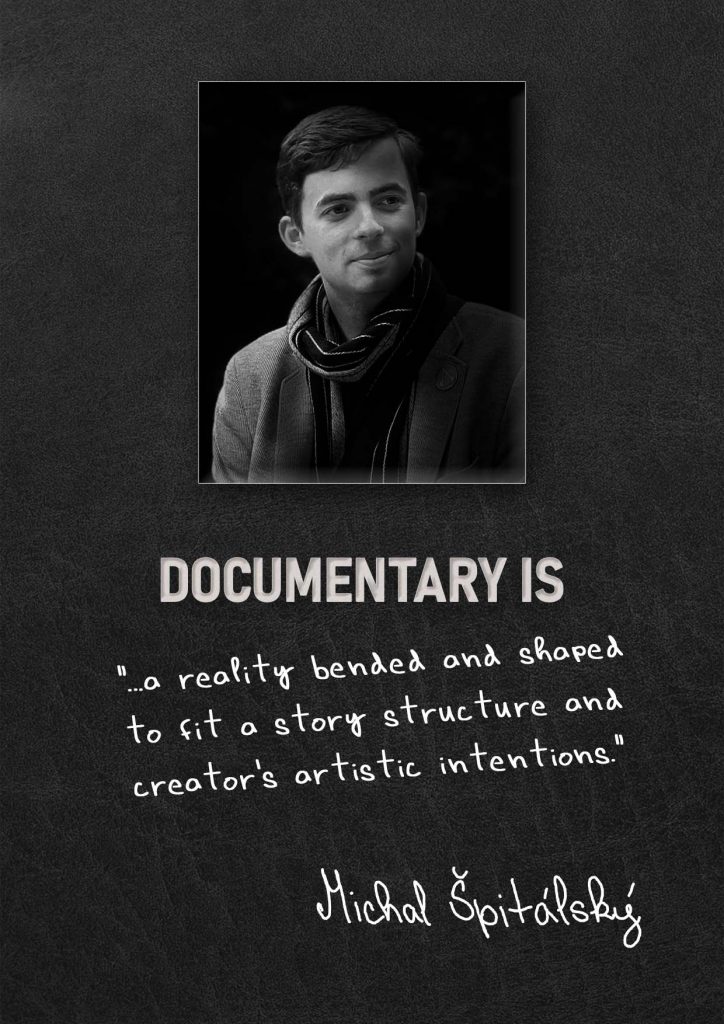
It is not a unified genre or style
- multiple genres
- several modes
- television documentaries / theatrical documentaries / internet documentaries
- corporate / big-budget / low-budget community projects
- documentaries strive for a change
- our cultural (political?) moment seems to require documentary forms
Types of footage
- observational
- archive
- constructed
- re-construction
- animated
- observational
Modes of documentary
- poetic
- more lyrical focus
- expository
- addresses viewer through „voice of god“
- observational
- creator doesn’t intervene
- more prominent with rise of portable equipment
- participatory
- reflexive
- self conscious approach
- performative